

When Should You Replace Your Furnace? Signs It Is Time to Stop Repairing
Deciding whether to repair your furnace or replace it is one of the more significant home comfort decisions a Pennsylvania homeowner will face. Repair it, and you keep the upfront cost low but risk another call next winter. Replace it, and you invest more now in exchange for reliability, efficiency, and years without concern. The right answer depends on several specific factors, and once you know how to read them, the decision is usually clearer than it first appears
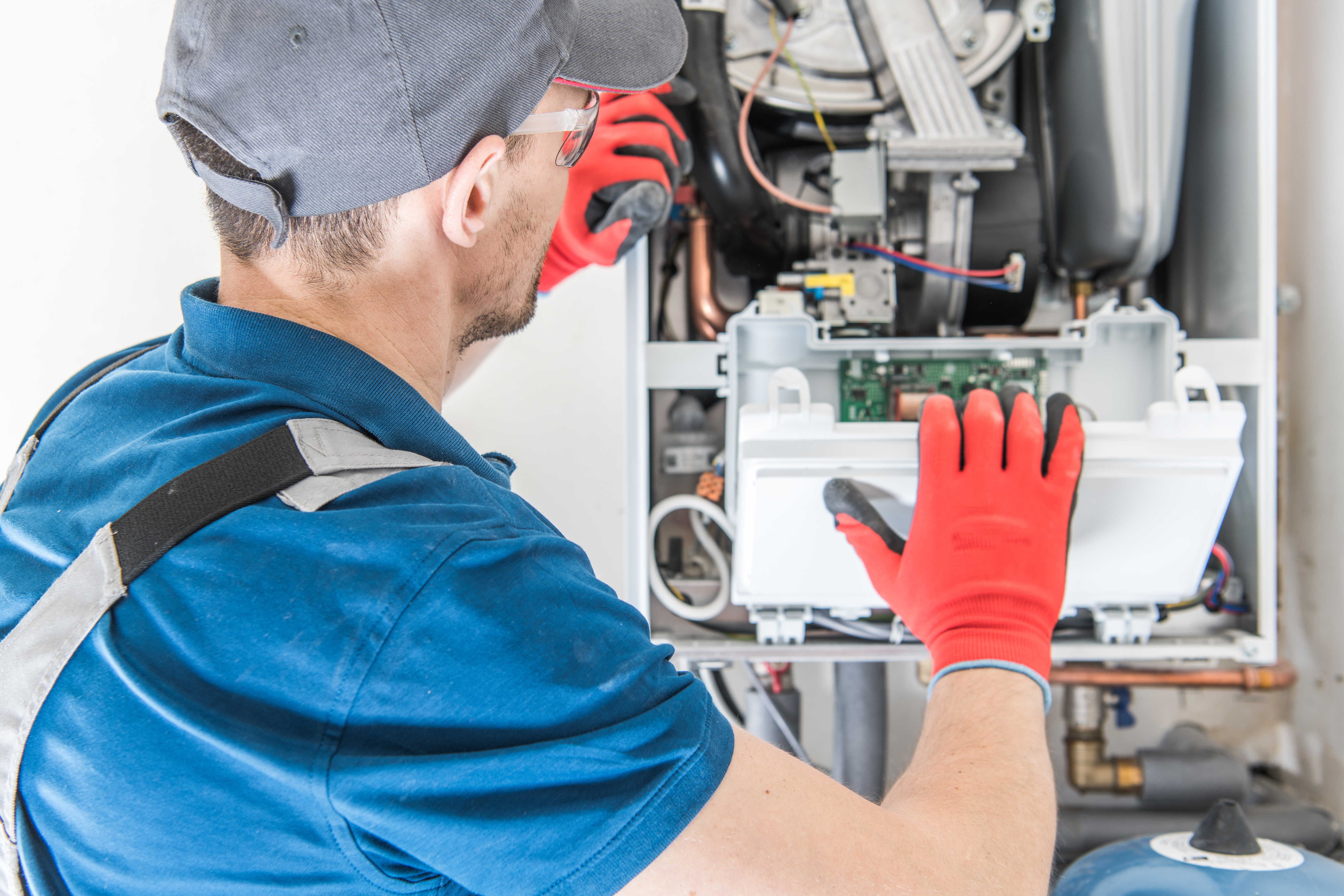
Here is the framework licensed HVAC contractors use to evaluate furnaces, adapted for York and Lebanon area homeowners who want to make a confident, informed choice.
The Age Rule: 15 to 20 Years Is the Benchmark
A gas furnace that has been properly installed and annually maintained typically lasts 18 to 22 years. One that was oversized, improperly installed, or rarely serviced may fail significantly sooner. Age alone does not determine whether replacement is the right call, but it changes the math on every other factor.
When a furnace under 12 years old needs a repair, the repair almost always makes financial sense unless it involves the heat exchanger. When a furnace over 18 years old needs the same repair, the calculus shifts. You are investing repair dollars into equipment that may fail completely within two to four years regardless, at which point you replace it under emergency conditions rather than on a planned schedule.
The U.S. Department of Energy recommends that homeowners consider replacing furnaces that are 15 years old or older and showing signs of inefficiency or repeated repair needs, particularly when upgrading to a high-efficiency system with an AFUE rating of 90 percent or higher.
The 50 Percent Rule
The most widely used framework for repair versus replacement decisions is the 50 percent rule: if the cost of a repair approaches or exceeds 50 percent of the cost of a new furnace of comparable quality, replacement is typically the better financial choice.
Applied practically: if a new furnace installed in your home costs a certain amount, and the repair you are facing costs half or more of that, the repair produces no positive equity. You are spending that money without extending the system’s life expectancy, increasing its efficiency, or adding a warranty.
Combine the 50 percent rule with the age rule, and the picture sharpens. A repair that is 30 percent of replacement cost is reasonable on a 10-year-old furnace. The same repair cost on a 17-year-old furnace is worth a harder look.
A Cracked Heat Exchanger Means Replacement, Not Repair
This is the one situation where the age and cost rules do not apply. A cracked heat exchanger is not a repair candidate. It is a safety issue.
The heat exchanger is the metal component that separates combustion gases from the air that circulates through your home. A crack allows carbon monoxide and other combustion byproducts to enter your living space. Carbon monoxide is odorless, colorless, and can be fatal at elevated concentrations.
The U.S. Consumer Product Safety Commission identifies faulty heating equipment, including cracked heat exchangers, as one of the leading sources of carbon monoxide poisoning in residential settings. When a technician confirms a cracked heat exchanger, replacing the furnace is the only appropriate response, regardless of the system’s age or the cost involved.
If you have a carbon monoxide detector, install one on every level of the home and near sleeping areas. Test it monthly. A cracked heat exchanger may be present in systems that show no obvious performance symptoms.
Multiple Repairs in Recent Seasons
Furnaces that have required two or more significant repairs within the past two to three years are exhibiting a pattern that typically accelerates rather than stabilizes. As components age together, failures tend to cluster rather than occur in isolation.
If you have replaced an ignitor one season, a pressure switch the next, and are now facing a blower motor issue, those three repairs collectively may approach or exceed the 50 percent threshold. Tracking total repair costs over the past three seasons is worth doing before committing to another significant repair on an aging system.
Efficiency Decline and Rising Heating Bills
Older furnaces lose efficiency over time even without a specific component failure. Burners accumulate residue that reduces combustion quality. Heat exchangers develop micro-cracks that are not yet dangerous but reduce heat transfer. Blower motors lose efficiency as bearings wear.
If your heating bills have increased noticeably over the past two or three winters despite similar weather and usage patterns, the furnace is likely operating well below its rated AFUE. A 15-year-old furnace with an 80 percent AFUE rating that has never been serviced may be operating at 70 percent or lower in practice. A new 95 percent AFUE furnace would cut fuel costs by roughly 25 to 35 percent on heating alone.
The American Society of Heating, Refrigerating and Air-Conditioning Engineers (ASHRAE) publishes standards for residential HVAC equipment efficiency. High-efficiency condensing furnaces, which achieve AFUE ratings of 90 percent and above, are significantly more cost-effective to operate than the standard 80 percent units installed in most homes before 2010.
Uneven Heating and Comfort Problems
A furnace that heats some rooms adequately but consistently fails to maintain comfortable temperatures in others, or one that cycles on frequently but never quite achieves setpoint on cold days, may be either failing mechanically or simply undersized for the home’s current load.
Uneven heating in an aging system often indicates a heat exchanger problem, a failing blower motor, or ductwork issues that have developed over the system’s life. A properly sized, correctly installed replacement solves these comfort problems at the source.
Your Furnace Uses R-22 or Another Discontinued Component
This applies primarily to heat pumps rather than gas furnaces, but some older gas furnace control boards and proprietary components have been discontinued by the manufacturer. When a key part for your specific furnace model is no longer available or has a months-long lead time, the repair-versus-replace calculus changes significantly. Replacement becomes the more predictable and often faster path to restored heat.
Pennsylvania Winter Context
York and Lebanon Counties experience genuine Pennsylvania winters. The Lebanon-Harrisburg metro area sees average January lows in the mid-teens to low 20s Fahrenheit, and multi-day cold stretches that push heating systems to their limits. A furnace that is borderline functional going into November in this climate is a furnace that may fail in January.
Planning a furnace replacement on your schedule, before an emergency forces the decision, gives you time to select the right equipment, secure financing if needed, and install during a period when contractor availability is not at peak demand. Emergency furnace replacements in mid-January are more expensive and often require accepting whatever equipment is available rather than what you would have chosen with more time.
The Right Replacement Decision Starts With an Honest Assessment
No homeowner should feel pressured to replace a furnace that legitimately still has useful years of service life. A licensed technician who is willing to repair a system that can reasonably be repaired, and who explains replacement clearly only when the evidence supports it, is the right technician to trust with this evaluation.
JX Pro Heating and Cooling has been serving York, Lebanon, and surrounding Pennsylvania communities for over 15 years. Our technicians hold Pennsylvania HVAC contractor License PA203730 and give honest repair versus replacement assessments on every call. We carry a 5-star Google rating across 132-plus verified reviews. Read them at Google, and verify our BBB accreditation at the Better Business Bureau.
If your furnace is showing any of the signs above, our furnace repair team can give you an honest assessment that includes both repair cost and replacement cost so you can compare them side by side. When replacement is the right call, our furnace installation service uses proper load calculations and installs Rheem high-efficiency equipment with extended manufacturer warranties. Financing through Synchrony is available for qualified homeowners. Call 717-600-4220 to schedule a diagnostic visit.