



Why Your AC Is Freezing Up and What to Do About It
Finding ice on your air conditioner during the hottest months of the year seems like a contradiction, but a frozen AC unit is a real and surprisingly common problem. It does not mean your system is working too hard. It means something is preventing the refrigerant inside the evaporator coil from absorbing heat the way it is supposed to, and the coil surface temperature is dropping below freezing as a result.
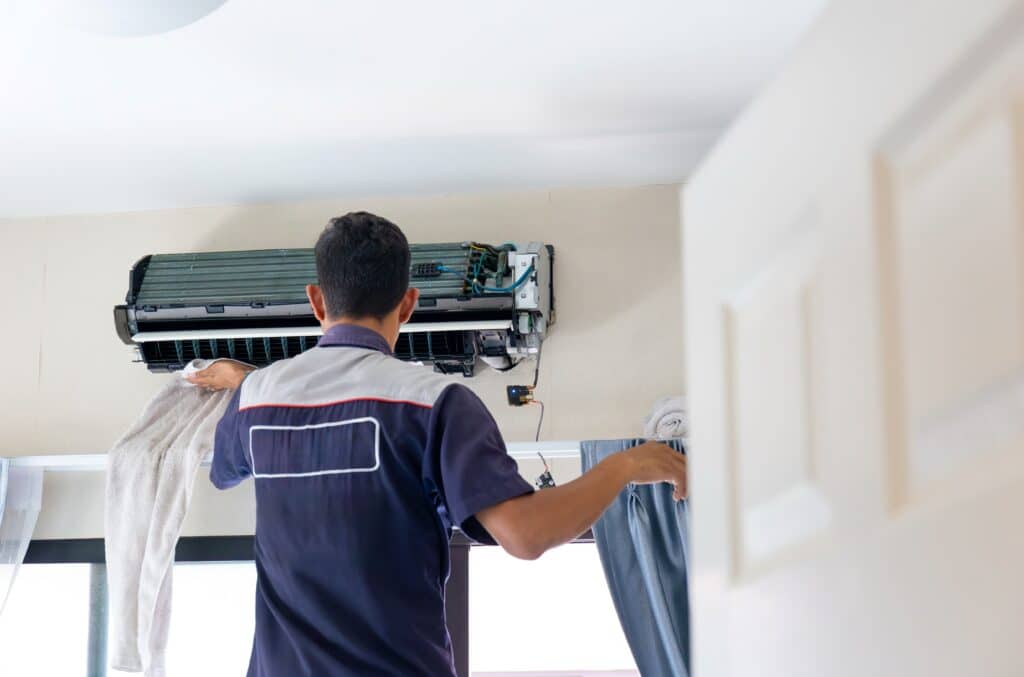
A frozen AC cannot cool effectively. As ice builds up on the evaporator coil, it blocks airflow and heat transfer more and more completely, eventually turning your air conditioner into a device that blows room-temperature or warm air while running continuously and consuming electricity. Left unaddressed, it can cause permanent compressor damage.
Here is what causes AC systems to freeze, what to do when it happens, and how to prevent it from happening again.
How AC Freezing Happens
The evaporator coil inside your air handler operates at a temperature well below the freezing point of water under normal conditions. That is by design. The coil is cold enough to cause moisture in the air passing over it to condense and drain away, which is how the system dehumidifies as well as cools.
The coil stays above freezing under normal operation because warm indoor air is constantly flowing across it, keeping its temperature in balance. When that balance is disrupted, either by too little airflow or too little refrigerant, the coil gets cold enough to freeze the moisture on its surface. Ice accumulates in layers, reducing airflow further, which accelerates the freezing.
Cause 1: Restricted Airflow
Restricted airflow is the most common cause of a frozen evaporator coil, and the most preventable. When not enough warm indoor air reaches the coil, the coil cannot absorb enough heat to keep its temperature above the frost point.
The most common airflow restriction causes:
- Clogged air filter:
A dirty filter is the first thing to check on any frozen AC call. The U.S. Department of Energy recommends changing filters every 1 to 3 months. A filter that has gone 4 to 6 months without replacement can restrict airflow enough to cause freezing on its own.
- Closed or blocked supply vents:
Closing vents in unused rooms to “save energy” is a common mistake. It increases static pressure in the duct system, which reduces total airflow across the evaporator coil. All supply vents should remain open during AC operation.
- Dirty evaporator coil:
A coil coated in dust and debris allows less airflow through its fin structure and also reduces heat transfer efficiency directly. Even with a clean filter, coil fouling can contribute to freezing over time.
- Collapsed or kinked flexible ductwork:
Flexible duct sections that have been compressed, kinked, or crushed during installation or after renovation restrict airflow to portions of the system, which can reduce total system airflow enough to contribute to coil freezing.
- Undersized return air:
Some homes have return air systems that are too small for the equipment. This is an installation design issue that restricts total airflow and can cause persistent coil freezing problems even with a clean filter and open vents.
Cause 2: Low Refrigerant
When refrigerant charge is below the correct level, the refrigerant pressure drops. Lower pressure means lower evaporator coil temperatures. The coil gets colder than it should, and moisture freezes on its surface even with adequate airflow.
A refrigerant leak does not fix itself. The system will lose refrigerant over time if the leak is not found and repaired, and the freezing problem will return or worsen after a simple top-off. Under EPA Section 608 regulations, refrigerant leaks above a certain threshold must be repaired, and refrigerant must be recovered from any system before it is opened for service. Only technicians with EPA Section 608 certification may legally purchase and handle regulated refrigerants.
Cause 3: Running the AC When Outdoor Temperatures Are Too Low
Standard central AC systems are not designed to operate when outdoor temperatures drop below approximately 60 degrees Fahrenheit. At low outdoor temperatures, the refrigerant pressure in the system drops below the normal operating range, causing the evaporator coil to get colder than designed and freeze.
This is most commonly a spring problem for York and Lebanon area homeowners who turn on the AC early in the season during an unseasonably warm afternoon, then leave it running overnight when temperatures drop into the 50s. If outdoor temperatures are below 60 degrees, turn the system off.
What a Frozen AC Looks Like
You may not see ice on the outdoor unit or the refrigerant lines directly. Signs that the evaporator coil is frozen include:
-
Little or no airflow from supply registers while the system is running
-
Air coming from registers feels warm or room temperature rather than cool
-
Visible ice on the large refrigerant line (the insulated copper line) between the outdoor unit and the interior wall penetration
-
Water dripping or pooling around the air handler because ice is melting into the drain pan and overflowing it
-
A hissing or gurgling sound from the evaporator coil area
What to Do When Your AC Is Frozen
Do not continue running the system in cool mode. Operating a frozen AC puts added strain on the compressor, which is the most expensive component in the system. Here is the correct sequence:
-
Turn the thermostat to “Fan Only” mode (not off, not cool). This runs the blower without the compressor, which circulates warm air across the frozen coil to thaw it.
-
Change the air filter while you are waiting. A clogged filter is the most common cause, and it needs to be addressed regardless.
-
Allow the system to thaw for 1 to 3 hours. You will know it has thawed when normal airflow resumes and you no longer see ice on the lines.
-
Check the condensate drain to make sure the water from the melting ice has somewhere to go. A clogged drain combined with a thawing coil often results in water damage.
-
Once thawed, switch back to cool mode and monitor. If the system freezes again within a few hours, the problem is something beyond a dirty filter and needs a technician.
Do not attempt to chip or break ice off the coil with any tool. Evaporator coil fins are made of very thin aluminum and are easily damaged.
When to Call an HVAC Technician
Call a licensed technician if:
-
The system freezes again after you have replaced the filter and allowed a full thaw
-
You suspect a refrigerant leak (the system has needed refrigerant added before, or it is an older system)
-
The drain pan is overflowing or you see water damage around the air handler
-
Airflow does not return to normal after thawing
-
You hear unusual sounds from the indoor unit after it thaws
Attempting to diagnose a refrigerant leak or recharge the system without EPA certification is both illegal under federal law and potentially dangerous. Refrigerant under pressure is hazardous, and improper handling can cause equipment damage and personal injury.
How to Prevent Your AC From Freezing
Most AC freezing is preventable with consistent attention to two things: airflow and maintenance.
-
Replace air filters every 1 to 3 months, or more frequently in high-dust or high-pet households
-
Keep all supply and return vents open and unobstructed
-
Schedule annual professional AC maintenance that includes evaporator coil inspection and cleaning
-
Have a technician check refrigerant pressure if the system is older than 5 years or has had any refrigerant service performed in the past
-
Avoid running the system when outdoor temperatures are below 60 degrees Fahrenheit
-
Keep vegetation and debris cleared from around the outdoor condenser unit
According to the American Society of Heating, Refrigerating and Air-Conditioning Engineers, proper system maintenance is the most effective and cost-efficient way to prevent common AC failures, including evaporator coil freezing.
AC Freezing and the Pennsylvania Climate
Central Pennsylvania homes deal with a wide range of conditions that contribute to AC freezing risk. Spring startup with low overnight temperatures, summer humidity that promotes rapid coil frosting under low-airflow conditions, and homes with older or improperly sized equipment are all factors.
Homes in York and Lebanon Counties often have equipment that is 10 to 15 years old, installed before variable-speed technology became widely accessible. Older single-stage systems that run at full capacity or not at all are more susceptible to freezing under marginal conditions than modern variable-speed equipment that adjusts output to match conditions.
JX Pro Heating and Cooling has been diagnosing and repairing AC problems throughout York, Lebanon, and surrounding Pennsylvania communities for over 15 years. Our technicians hold Pennsylvania HVAC contractor License PA203730 and EPA Section 608 certification for all refrigerant work. We carry a 4.9-star Google rating across 125-plus verified reviews. Read them at Google.
If your AC is frozen or keeps freezing, our AC repair team diagnoses the root cause and provides a clear, upfront price before any work begins. For urgent situations, we offer emergency AC repair with a one-hour response commitment throughout our service area. Annual AC maintenance catches the most common freeze triggers, including dirty coils and marginal refrigerant charge, before they cause a mid-summer failure.
Call JX Pro Heating and Cooling at 717-600-4220 for same-day or emergency AC service in York, Lebanon, Harrisburg, Hershey, Lancaster, and surrounding communities.