


Why Your AC Is Leaking Water Inside Your Home
Finding water pooling near your indoor air handler or dripping from the ceiling below an attic-mounted unit is alarming, and for good reason. An AC system that is leaking water inside the home can cause ceiling and wall damage, mold growth, and secondary damage to the air handler itself if the water reaches electrical components.
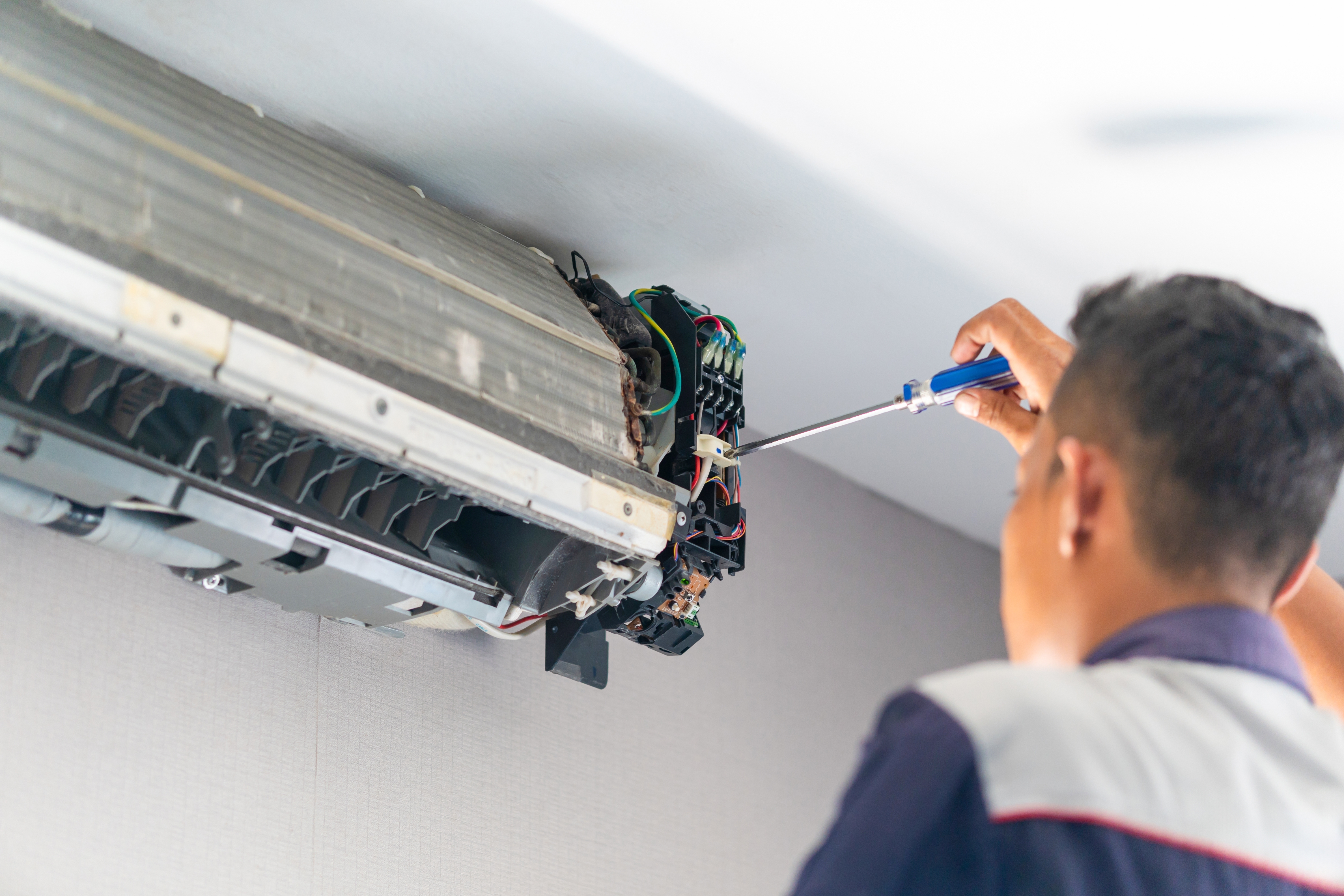
Water coming from your indoor AC unit is a drainage failure, not a cooling failure. Understanding exactly how your AC produces water, and where that water is supposed to go, makes it clear why each of the causes below produces a leak. Here is what York, Lebanon, and surrounding Pennsylvania homeowners need to know.
How Your AC Produces Water
Your air conditioner does not just cool indoor air. It also dehumidifies it. When warm, humid air passes over the cold evaporator coil inside your air handler, moisture from the air condenses on the coil surface, the same way a cold glass of water collects condensation on a humid day.
That condensate water drips down the coil fins, collects in the drain pan beneath the coil, and flows out through the condensate drain line to a floor drain, utility sink, or exterior outlet. On a humid Pennsylvania summer day, a properly functioning AC system can remove a significant amount of moisture from your indoor air, all of which travels through this drainage path.
When any part of this drainage path fails or becomes overwhelmed, water backs up and leaks into the home.
Cause 1: Clogged Condensate Drain Line
A clogged condensate drain line is the most common cause of AC water leaks, and it is particularly common in central Pennsylvania homes where humidity is high and systems run long hours through summer.
The drain line is a PVC pipe, typically three-quarters of an inch in diameter, that carries condensate water from the drain pan to its outlet point. Over time, algae, mold, and debris accumulate inside the line. The humid, dark, slow-moving water environment is ideal for biological growth, and without regular maintenance, the line eventually blocks completely.
When the drain line clogs, condensate backs up in the drain pan. Once the pan fills, water overflows onto the air handler and whatever structure is beneath it.
Signs the drain line is clogged:
• Water pooling directly beneath the air handler
• A musty smell from the AC supply registers as algae grows in the drain pan
• The system has shut off unexpectedly (a safety float switch has triggered)
• Visible water staining on the ceiling below an attic air handler
Cause 2: Float Switch Triggering a Safety Shutdown
Most modern air handlers include a float switch in the drain pan. When water rises to a set level, the float switch shuts the system off to prevent overflow. This is a safety feature, not a malfunction. When the system shuts off for no apparent reason on a hot day, a triggered float switch is a common cause.
A triggered float switch does not indicate the switch has failed. It indicates that water is accumulating in the pan faster than the drain line can remove it, which means the drain line is partially or fully blocked.
Resetting the system without clearing the drain line will result in the float switch triggering again, usually within a day or two. The drain needs to be cleared to restore normal operation.
Cause 3: Frozen Evaporator Coil Thawing
A frozen evaporator coil and a leaking AC are related but distinct problems. When a coil freezes during operation, the ice that forms on the coil surface eventually melts when the system shuts off or when airflow is restored. That melting ice produces a large volume of water in a short period, which the drain pan may not handle quickly enough, causing overflow.
If you notice water around the air handler after the system has been off for a period, a recently thawed frozen coil may be the source. The freeze itself is caused by restricted airflow or low refrigerant, which are separate problems that need to be diagnosed and corrected to prevent a recurrence. Addressing the drain pan overflow without fixing the freezing cause means the problem will repeat.
For more detail on why AC systems freeze and how to address it, see our guide to why your AC is freezing up.
Cause 4: Cracked or Overflowing Drain Pan
The drain pan itself can crack over time, particularly in older systems where the plastic pan has become brittle. A cracked pan allows water to escape through the crack rather than down the drain line, producing a leak even when the drain line is clear.
Two-stage air handlers and older systems sometimes have a secondary or auxiliary drain pan beneath the primary pan as an additional safety measure. If water appears in the secondary pan, it means the primary drainage system has already failed and the secondary pan is catching the overflow. This is a sign that immediate service is needed.
Replacing a cracked drain pan is a relatively straightforward repair, but it requires accessing the air handler and typically involves removing the coil assembly. This is a licensed technician job.
Cause 5: Improper Installation or Air Handler Pitch
Air handlers must be installed with a slight tilt toward the drain outlet so that condensate water flows toward the drain rather than toward the front or sides of the unit. An air handler that is perfectly level or tilted the wrong direction allows water to pool and eventually overflow in the wrong direction.
This is most commonly seen in attic-mounted units where the installer did not pitch the unit correctly, or where the mounting structure has settled over time. It is also seen in horizontal-mount air handlers where the pitch is critical to proper drainage.
Correcting an installation pitch problem requires repositioning the air handler, which is a job for a licensed technician who can also inspect the drain pan condition and drain line while accessing the unit.
The Pennsylvania Humidity Factor
Central Pennsylvania sits in a mid-Atlantic climate zone with consistently high summer humidity. The York-Harrisburg-Lebanon corridor regularly sees afternoon relative humidity above 70 percent, meaning the condensate load on air conditioning systems is substantial.
A drain line that might clear itself in a drier climate can fail completely in central Pennsylvania because the volume of condensate produced is simply higher. Annual drain line flushing as part of a maintenance visit is more important here than in lower-humidity regions, and systems that have never been maintained are at higher risk of drain failure every summer.
The U.S. Environmental Protection Agency notes that indoor moisture from sources including air conditioning drainage failures creates conditions for mold growth within 24 to 48 hours of a water leak. Addressing AC water leaks promptly is not just an equipment maintenance issue; it is a home health issue.
What Homeowners Should Do When the AC Is Leaking
1. Turn the system off at the thermostat to stop additional water production.
2. Check whether the air filter is clogged and replace it if so.
3. Locate the condensate drain line outlet and confirm water is draining. Many systems have a PVC pipe exiting near the outdoor unit or to a floor drain.
4. If you can safely access the indoor unit, check the drain pan water level. If it is full, the line is blocked.
5. A wet/dry vacuum applied to the end of the drain line for 1 to 2 minutes can sometimes clear a soft clog. This is one of the few AC maintenance tasks homeowners can safely attempt.
6. If water has contacted drywall, insulation, or structural materials, document the damage and address the moisture promptly to prevent mold.
7. Call a licensed technician if the drain line cannot be cleared, if the pan is cracked, if the leak source is unclear, or if the system was frozen before the leak appeared.
JX Pro Heating and Cooling serves York, Lebanon, and surrounding Pennsylvania communities with licensed AC repair and maintenance. Our technicians hold Pennsylvania HVAC contractor License PA203730 and know exactly what to look for when an AC system is leaking. With a 5-star Google rating across 132-plus reviews and BBB accreditation at the Better Business Bureau, JX Pro is the team York and Lebanon homeowners trust.
Our AC repair service diagnoses the source of any water leak and fixes the underlying cause, not just the symptom. Annual AC maintenance includes condensate drain flushing and drain pan inspection, catching blockages before they overflow. For urgent situations where water is actively leaking, our emergency AC repair service responds within one hour.
Call JX Pro Heating and Cooling at 717-600-4220 to schedule a diagnostic visit or request same-day service throughout York, Lebanon, and surrounding central Pennsylvania.